Independent-style editorial overview • Performance statements are distinguished from verified outcomes
Balanced DIY Energy Review

Energy Revolution System Review: A Balanced Overview

A practical look at what the Energy Revolution System is presented as, how its Tesla-inspired DIY concept is described, what potential buyers should question, and why safety and realistic expectations matter before starting any home electrical project.

✓ Claim-aware analysis ✓ Practical limitations included ✓ No guaranteed savings assumed
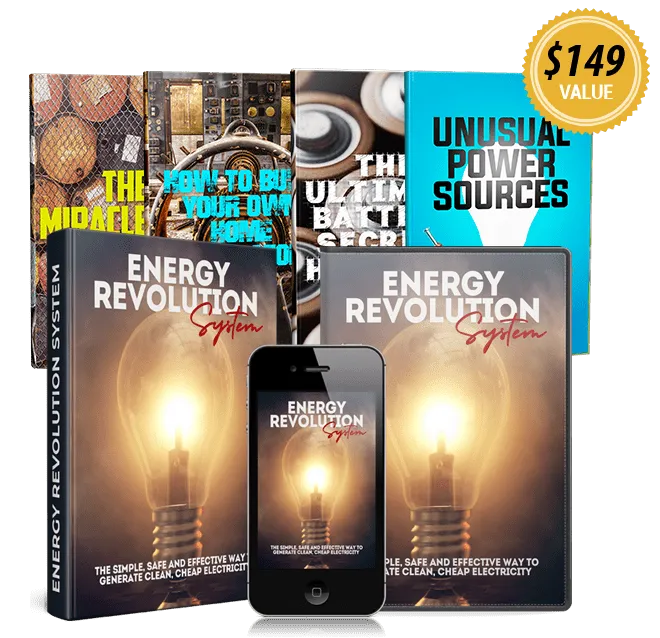
Energy Revolution System guide and digital bundle
Review focus: concept, usability, claims, limitations and safety

The balanced verdict in one minute

The Energy Revolution System may be most relevant to people who enjoy DIY learning and want to explore alternative home energy concepts. The key caution is equally important: dramatic electricity-savings or power-output claims should not be treated as guaranteed results. Evaluate the guide as a DIY project, verify technical assumptions, and put safety before promotional promises.

Best fit: curious DIY learners and energy-preparedness readers
Key strength: accessible, project-oriented positioning
Main caution: claimed outcomes require critical evaluation

Independent-style overview

What should you know before considering the system?

Rising electricity costs, concerns about outages, and growing interest in household resilience have encouraged many people to explore alternatives to complete dependence on conventional utility power. That interest has also created a large market for DIY energy guides, backup-power plans, home efficiency projects, and unconventional generator concepts. The Energy Revolution System enters this space with a particularly ambitious message: it is presented as a practical DIY approach inspired by Nikola Tesla's bifilar coil work.

At first glance, that combination is easy to understand. Tesla's name attracts attention, while the promise of a buildable home project appeals to people who prefer hands-on solutions. Yet a credible review should do more than repeat the sales narrative. It should separate the existence of an electrical concept from claims about how much usable energy a particular homemade setup can deliver in real conditions.

Direct answer

The Energy Revolution System is marketed as a beginner-oriented DIY energy project built around a Tesla-inspired bifilar coil concept. Its appeal lies in hands-on learning, affordability, and reduced grid dependence; however, large savings and performance statements should be viewed as seller claims, not guaranteed outcomes.

That distinction shapes this entire review. The goal is not to dismiss an idea simply because it is unconventional, and it is not to endorse every performance statement simply because it appears on a product page. Instead, the useful question is: what is a prospective user actually evaluating? In practical terms, they are evaluating the clarity of a DIY guide, the feasibility of sourcing components, the technical demands of assembly, the safety implications of electrical work, and the evidence supporting any promised result.
Energy Revolution System related home energy visual
Product-related visual. Prospective users should evaluate real-world requirements and measurable output rather than relying on imagery alone.

What is the Energy Revolution System?

According to the seller's description, the Energy Revolution System is a DIY-focused solution intended to help households explore producing usable electricity and reducing reliance on conventional providers. Its central idea is associated with a Tesla-inspired bifilar pancake coil. The sales material emphasizes basic tools, commonly sourced components, step-by-step directions, portability, and accessibility for people without formal engineering backgrounds.

This description gives the product a different role from a finished solar generator, a professionally installed battery system, or a certified household power appliance. A DIY guide asks the user to participate directly. That means the eventual experience can depend on component selection, construction quality, testing procedures, electrical losses, load demands, troubleshooting ability, and whether the builder correctly understands the limits of the finished setup.

This is also why the word system deserves careful interpretation. A reader should confirm exactly what is being purchased and what still needs to be sourced, constructed, tested, or connected. Digital instructions are not the same as a preassembled generator. A clear-eyed buyer should budget not only for access to information but also for materials, tools, replacement components, measurement equipment, and possibly qualified assistance.

Important reality check

The promotional page makes substantial statements about electricity savings and usable power. The seller's own disclaimer, however, states that results may vary with individual circumstances, proper assembly, and usage, and that specific outcomes are not guaranteed. A balanced review must preserve that qualification rather than presenting the highest advertised result as typical.

Understanding the concept

How is the DIY approach presented?

The seller describes a staged process involving component sourcing, assembly, testing, and eventual use. For a responsible reader, each stage should include its own technical and safety checks.

Tesla-inspired coil idea

The product narrative centers on a bifilar pancake coil arrangement. Inspiration from a historical design does not by itself verify modern performance claims, so measured input and output remain important.

Hands-on assembly

Users are expected to follow instructions and work with physical components. The quality of connections, insulation, ratings, and construction can materially affect safety and results.

Testing before scaling

A sensible DIY workflow begins with controlled testing and modest loads. Household appliances can demand far more power than small demonstration devices, particularly at startup.

1

Review the complete material first

Before buying components, understand the full build, required tools, electrical input, expected output, connection method, and any assumptions made by the guide.

2

Price the complete project

Compare the real material and tool cost with established alternatives. A low-cost guide does not necessarily mean every finished configuration will be equally inexpensive.

3

Build conservatively

Use properly rated parts, sound insulation, appropriate protective equipment, and cautious procedures. Stop when instructions or electrical behavior are unclear.

4

Measure actual performance

Compare electrical input and usable output with suitable instruments. Avoid judging efficiency from a single light, spinning component, or brief demonstration.

Two-sided assessment

Potential advantages and meaningful limitations

A genuinely useful review should make room for both. The system can be interesting as a DIY learning proposition without requiring readers to accept every advertised outcome.

What may appeal to users

  • The DIY format can encourage practical learning about coils, circuits, components, and energy measurement.
  • A step-by-step structure may feel more approachable than attempting to design an electrical project from scratch.
  • The concept is relevant to readers already interested in resilience, alternative energy, and reducing unnecessary grid dependence.
  • Starting with a compact experimental project may require less space than large permanent energy installations.
  • The seller currently advertises a 60-day refund policy, although buyers should verify current terms before purchase.

What requires caution

  • Large savings percentages on a sales page should not be assumed to represent a typical household result.
  • DIY electrical projects can involve shock, heat, fire, battery, wiring, and equipment-damage risks.
  • A coil design associated with Tesla does not automatically prove claims of unusually high net usable energy output.
  • Real costs may include tools, components, meters, failed parts, troubleshooting time, and professional assistance.
  • Integrating any homemade device with household wiring can raise serious code, insurance, interconnection, and safety issues.

Audience fit

Who may find this type of guide worth researching?

Suitability depends less on excitement about a headline claim and more on your expectations, technical comfort, available time, and willingness to verify results.

Hands-on DIY learners

People who genuinely enjoy assembling, measuring, troubleshooting, and understanding projects may appreciate the educational process more than someone seeking a plug-and-play appliance.

Energy-preparedness planners

Readers exploring multiple layers of household resilience may be interested in studying unconventional approaches alongside proven options such as efficiency upgrades, batteries, or generators.

Curious technical experimenters

A person comfortable questioning assumptions and recording actual input, output, losses, and load behavior is better positioned to evaluate a DIY energy concept objectively.

Budget-conscious researchers

Those comparing energy options may value learning about different approaches, provided they calculate the complete project cost and do not assume guaranteed financial returns.

Electrical energy infrastructure related visual

Do not skip this section

Safety matters more than promised savings

Describing a project as beginner-friendly does not remove the basic hazards associated with electricity. Risk changes with voltage, current capability, batteries, capacitors, insulation, heat, conductor size, protection devices, enclosure design, environmental conditions, and how a setup is connected to a load.

The safest approach is to keep experiments isolated from household mains wiring unless a properly qualified professional and applicable local requirements support the intended installation. Never assume that a homemade source can simply be connected to a home circuit, breaker panel, or public grid.

Verify component voltage, current, temperature and power ratings.
Use suitable fuses, protection, insulation and enclosures where required.
Treat batteries and stored electrical energy as potential hazards.
Follow local electrical rules and seek professional help for uncertain connections.

Deeper evaluation

How credible buyers should assess performance claims

One of the most important habits in energy research is to ask for measurable quantities. Words such as powerful, efficient, independent, or high output can sound impressive while remaining incomplete. A household device has to satisfy actual loads. A refrigerator, for example, does not merely need a vague concept of electricity; it needs compatible voltage, frequency where applicable, sufficient continuous power, and enough surge capacity for its compressor.

Therefore, someone assessing the Energy Revolution System should look beyond whether a coil produces a measurable electrical effect. The more useful questions concern net energy, usable output, duration and stability. How much energy enters the complete system? How much usable electrical energy leaves it? What losses occur? How long is the result sustained? What is the cost of storage or conversion? Does the output remain stable under real loads?

The conservation-of-energy question

This point is fundamental rather than negative. Established physics treats energy as something that can be transferred and transformed, not created from nothing. A coil can affect inductance, electromagnetic behavior, voltage distribution, and circuit characteristics, but extraordinary claims about a device producing more net energy than is supplied or captured from an identifiable source require extraordinary evidence.

That is why the most reasonable mindset is experimental and evidence-focused. If a project is valuable because it teaches a user to build and measure circuits, that is a legitimate form of value. If it is expected to replace a substantial portion of household electricity use, the evidence threshold should be much higher.

What about the advertised savings?

The seller promotes substantial reductions in electricity costs. A balanced article should not quietly convert those numbers into facts. Household savings can vary because electricity prices, appliance loads, climate, occupancy, baseline consumption, construction quality, operating time, and the amount of energy genuinely displaced from the utility all differ.

The most defensible approach is to establish a baseline from utility bills or a suitable meter, document the actual energy supplied by a project, and compare like with like over a meaningful period. Any claim that a system lowered a bill should also control for seasonal changes, reduced consumption, tariff changes, travel, weather, and other efficiency improvements.

What makes the guide attractive despite the cautions?

The appeal is not difficult to see. Many established home energy upgrades carry significant upfront costs. Solar installations, whole-home battery systems, major rewiring, and standby generators may require professional design, permitting, space, and a considerable budget. A DIY concept presented as accessible and constructed from obtainable materials naturally feels more approachable.

There is also a psychological benefit to hands-on learning. Building something can make energy use less abstract. A person may begin paying closer attention to watts, watt-hours, standby consumption, appliance efficiency, storage limits, and the difference between peak and continuous loads. Even when a DIY experiment does not meet its most ambitious expectations, that improved energy literacy can be useful.

Still, value depends on expectations. Someone looking for an educational project may judge the material differently from someone expecting a guaranteed reduction in their monthly utility bill. Before purchasing, decide which outcome matters to you and what evidence would be required to consider the project successful.

How does it compare with established options?

The Energy Revolution System should not be evaluated in a vacuum. A household trying to improve energy resilience can compare several routes: insulation and air sealing, efficient appliances, smart load management, rooftop or portable solar, battery storage, fuel-powered backup generators, and behavior changes. These choices solve different problems and have different evidence bases, costs, maintenance requirements, and limitations.

Simple efficiency measures often deserve early attention because the cheapest unit of electricity can be the one you avoid consuming. Backup batteries can provide quiet short-duration power but require charging and have finite capacity. Solar can provide an identifiable energy source but depends on location, weather, system design, and storage. Fuel generators can deliver substantial power but introduce fuel, emissions, noise, and ventilation concerns.

A DIY coil-based concept therefore needs to earn its place through measurable performance, not simply by being described as less expensive or more revolutionary. Comparing complete costs and actual delivered energy is more useful than comparing slogans.

Buying considerations before making a decision

First, confirm what the purchase includes. Determine whether you are buying downloadable educational material, plans, bonuses, videos, a component kit, or some combination. Do not assume that images of a finished setup mean every physical component is included.

Second, check the current refund terms directly on the seller's page. At the time this review was prepared, the seller advertised a 60-day money-back guarantee. Policies and processes can change, so record the applicable terms, support route, purchase date, and transaction details.

Third, assess the full cost of participation. Include materials, shipping, tools, meters, safety equipment, storage or conversion hardware, replacement parts, and professional advice where needed. A realistic budget protects against judging the project solely by the initial digital purchase price.

Finally, read both promotional and cautionary material. The strongest reason to take this step is simple: the seller's own disclaimer acknowledges variation in outcomes and does not guarantee specific performance. That is a material consideration for anyone buying primarily because of a numerical savings claim.

Research the current offer before deciding

Review the latest product description, included materials, purchasing terms, and refund information directly on the linked product page. Compare those details with your own technical ability, budget, and expectations.

External commercial link. Results should not be assumed or guaranteed. Verify current terms before purchase.

Visit Product Page →

Common questions

Energy Revolution System FAQ

What is the Energy Revolution System?

It is presented by its seller as a DIY-oriented home energy solution centered on a Tesla-inspired bifilar coil concept. Prospective buyers should confirm exactly what educational materials or other items are included before purchasing.

Is the Energy Revolution System a ready-made generator?

Do not assume so from the product name or promotional images. The offer is strongly positioned around DIY assembly and instructions. Verify the current package contents directly on the purchase page.

Does it guarantee lower electricity bills?

No guaranteed result should be assumed. The seller promotes substantial potential savings, but its own disclaimer states that results can vary according to circumstances, assembly and usage, and that specific outcomes are not guaranteed.

Is it suitable for a complete beginner?

The seller describes the approach as beginner-friendly. Nevertheless, beginners should be especially conservative with electrical work. Clear instructions do not eliminate hazards associated with improper components, wiring, batteries, stored energy, heat, or unsuitable connections.

Can it power large household appliances?

The promotional material makes claims about supporting various appliances, but actual capability should be established through measured continuous output, surge capacity, voltage quality, system configuration, and load requirements. Do not infer appliance compatibility without technical verification.

Is a 60-day refund policy available?

The seller currently advertises a 60-day money-back guarantee. Because commercial terms can change, confirm the current conditions, eligible period, and refund procedure on the product page before ordering.

Is this the same as solar power?

No. Solar photovoltaic systems convert identifiable solar radiation into electricity. The Energy Revolution System is marketed around a different DIY electromagnetic and coil-based concept. The two should not be treated as technically equivalent.

What is the most important point in this review?

Separate curiosity from certainty. A DIY project can be interesting and educational, but ambitious energy-output or savings statements should be verified with measurements and should not be treated as guaranteed household results.

Final assessment

Final thoughts: interesting concept, realistic expectations required

The Energy Revolution System occupies an appealing corner of the home energy market. It combines concerns about rising utility costs with the popularity of DIY projects and the enduring fascination surrounding Tesla-inspired electrical ideas. For the right person, those ingredients can make the guide worth investigating as a hands-on learning experience.

The balanced conclusion, however, is not that every promotional statement should be accepted at face value. Claims of major bill reductions, substantial appliance support, or unusual energy performance require objective measurements and context. The seller's own disclaimer reinforces the need for caution by acknowledging that outcomes vary and specific results are not guaranteed.

Prospective users should therefore approach the system with curiosity, a realistic budget, respect for electrical safety, and a willingness to test results. Evaluate the quality of the instructions, understand exactly what the purchase includes, calculate the full project cost, follow applicable rules, and seek qualified assistance whenever a connection exceeds your competence.

In that framework, the Energy Revolution System is best viewed not as a promise of automatic energy independence but as a DIY proposition to examine carefully. That may sound less dramatic than a sales headline, but it is a far more useful starting point for an informed decision.

Ready to review the current product information?

Check the latest offer details and terms directly before making your decision.

Explore Current Details →